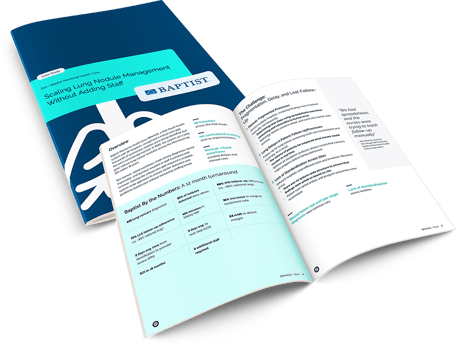
How Baptist Memorial Drove Lung Cancer Outcomes, Scaling Impact Without Headcount
See how the health system operationalized program management across 20 hospitals to drive clinical outcomes and grow revenue.
- 625 lung cancers diagnosed
-
$3.44M
in direct
margin - 0 additional staff required
THE CHALLENGE
The “Mid-South Miracle” was too big to achieve under the status quo
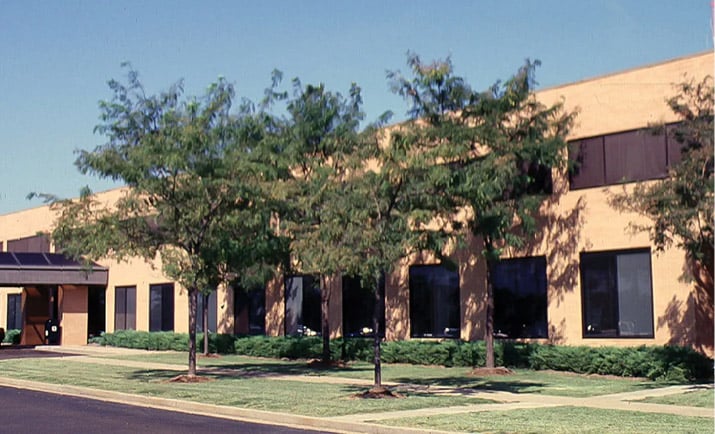
Baptist Memorial Health Care Corporation (BMHCC) pledged to bring about a reduction in lung cancer deaths by , but the limits of the lung cancer screening and incidental pulmonary nodule programs they had in place became clear.
Barriers to success
- Staffing limitations
- Fragmented processes
- Inconsistent follow-up
- Lack of physician alignment

THE SOLUTION
BMHCC scaled tech and services to manage surging case volume
They replaced manual processes with a single platform and an enterprise approach to centralize operations, support top-of-license care management, and deliver longitudinal care at scale.
Key enablers
- Risk-based segmentation
- Intelligent automation
- End-to-end patient-level reporting
- Systemwide standardization
THE RESULT
They achieved high impact without hiring – and ROI within eight months
Having seen the impact across hospitals and more than lung patients, BMHCC is now looking ahead to additional oncology cohorts. For the “Mid-South Miracle,” this is just the beginning.
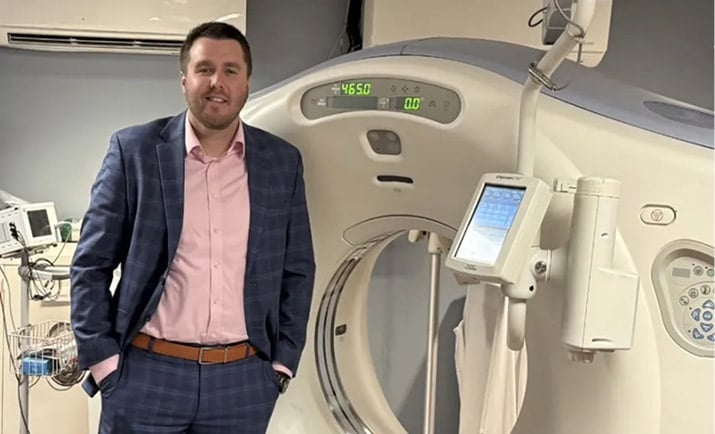
We set a goal to reduce lung cancer mortality across the mid-south by 25% in 10 years. This tool is going to help us do that.Parker Harris, CEO and Administrator, Baptist Memorial Hospital-Tipton
Learn what your health system can take from the Baptist playbook.